The Embroidery Font: Weaving Charm Into Modern Design
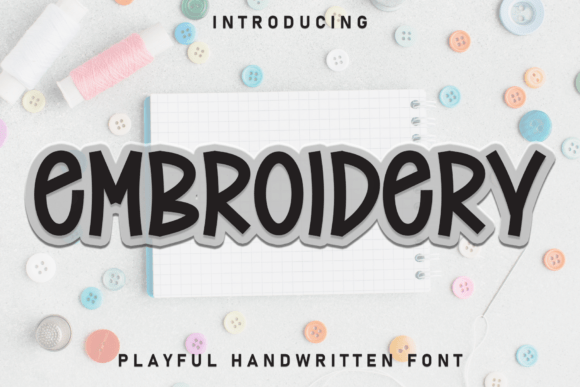
There is a distinct tactile quality to embroidery—the feeling of thread pulled taut, the slight imperfection of a hand-stitched loop, and the warmth of a gift made by hand. In the digital realm, we often lose that human touch, trading the organic curve of yarn for the rigid vector path. However, the Embroidery typeface attempts to bridge that gap. It is a charming, whimsical handwritten display font that captures the essence of positivity and warmth without requiring a needle and thread. By mimicking the natural flow of hand-stitching, this typeface radiates a friendliness that sterile, geometric fonts simply cannot replicate.
Visually, Embroidery is characterized by its fluid, connected strokes and a baseline that feels lived-in rather than mechanical. It avoids the sharp, aggressive angles found in many modern geometric typefaces. Instead, it embraces soft curves and a bouncy rhythm that suggests movement and joy. This isn't just a script font; it is a design asset that brings a "lighthearted fun" to your layouts. The visual weight is balanced carefully—it is bold enough to be read as a headline but delicate enough to retain that sweet, approachable personality. It feels less like a font you downloaded and more like a message written specifically for the recipient.
Where Personality Meets Function: Ideal Applications
Understanding where to deploy a premium font like Embroidery is crucial for any designer or business owner. Because it is a display font, its primary strength lies in headlines, logos, and short bursts of expressive text. It is perfectly suited for the wedding industry. Imagine a save-the-date card or a wedding invitation suite; the Embroidery font instantly sets a tone of intimacy and celebration. It whispers "personal touch" to the viewer, making the event feel bespoke and curated.
Beyond weddings, this creative font shines in packaging design. If you are a small business owner selling artisanal goods—think homemade jams, candles, or skincare—the Embroidery typeface on your label communicates that the product inside is crafted with care. It bridges the gap between a serif font (which might feel too traditional or corporate) and a sans serif font (which can feel too clinical). Embroidery sits in that sweet spot of approachable authenticity.
For digital creators and marketers, the application extends to social media graphics. In a crowded feed dominated by bold, shouting sans-serifs, a delicate, handwritten style stands out. It creates a visual pause for the scroller. Use it for Instagram stories, quote cards, or promotional banners where you want to convey a message of kindness or celebration. It also works beautifully in editorial design, specifically for pull quotes or section headers in lifestyle magazines and blogs, adding a layer of personality to the visual hierarchy of the page.
The Psychology of Style: Influence on Brand and Perception
Typography is rarely just about legibility; it is about psychology. The font you choose for your brand identity dictates how your audience feels about you before they read a single word of your copy. Choosing the Embroidery font signals that your brand is human, empathetic, and accessible. It softens the hard edges of commerce. For a web design project, using this typeface for headers can reduce the "bounce rate" because it invites the user in rather than presenting them with a wall of corporate text.
However, relying solely on a handwritten font like Embroidery requires a strategic approach to visual hierarchy. If you set an entire paragraph in Embroidery, you will likely frustrate your reader and compromise readability. This is where font pairing becomes an essential skill. The whimsy of Embroidery is best balanced by a clean, neutral companion. A classic sans serif font like Montserrat or a simple serif font like Lora provides the necessary structure for body text, allowing Embroidery to act as the decorative, emotional anchor of the design.
Practical Guidance for Implementation
When integrating this modern typography into your workflow, there are several practical considerations to ensure the final product remains professional.
- Evaluating Project Fit: Before selecting Embroidery, ask yourself about the "voice" of the project. Is the goal to be authoritative and commanding? If so, this might not be the right fit. If the goal is to be welcoming, nostalgic, or celebratory, Embroidery is an excellent choice.
- Testing Font Pairings: Do not rely on default settings. Test Embroidery against different weights of your body copy. Because Embroidery has a distinct texture, it pairs best with fonts that have a clean geometry. Avoid pairing it with other decorative fonts, such as a heavy script font or a grunge typeface, as this creates visual noise and chaos.
- Reviewing Included Styles: High-quality design assets often come with alternates, ligatures, or stylistic sets. Check if the Embroidery font includes different versions of specific letters (like 'g' or 'r') to avoid repetition in longer words, which helps maintain that authentic handwritten look.
- Readability Considerations: Always test your color contrast. A whimsical font can disappear if the color palette is too low-contrast. Because the strokes are thinner than a standard sans serif font, ensure there is sufficient white space around the text to let it breathe.
- Commercial Licensing: For entrepreneurs and small business owners, verifying the commercial font license is non-negotiable. Ensure the license covers your specific use case, whether it is for physical goods (merchandise), digital products, or large-scale print runs. This protects your business and respects the work of the type designers.
Ultimately, Embroidery is more than just a typeface; it is a tool for connection. In a digital landscape that often feels cold and automated, using a font that radiates warmth and positivity can be a subtle but powerful differentiator. Whether you are designing a logo, crafting a wedding invitation, or building a social media presence, Embroidery offers a way to infuse genuine joy into your creative projects, ensuring your designs don't just look good, but feel good too.