The Unspoken Power of Absolutely Silent
There is a specific kind of tension in design where you need to communicate intimacy without shouting, and elegance without feeling archaic. We often default to heavy-handed scripts or sterile sans serifs, but the sweet spot is usually somewhere in the middle. Absolutely Silent is a typeface that lives in that nuanced space. It is a handwritten font that manages to feel incredibly personal while maintaining the poise of a professional design asset. It doesn’t try to mimic the frantic energy of a teenager’s notebook or the illegible flourishes of wedding invitations. Instead, it offers a refined, single-line flow that feels like a whisper.
As designers and creators, we are constantly battling visual noise. Every pixel on a screen and every inch of packaging is fighting for attention. When you introduce a font like Absolutely Silent into your toolkit, you are choosing to de-escalate that conflict. It brings a distinct, timeless quality to modern typography, offering a breath of fresh air for projects that need to feel human, grounded, and sophisticated. Whether you are building a brand identity from scratch or refreshing a blog layout, understanding how to wield this font can fundamentally change how your audience perceives your message.
A Study in Refined Simplicity
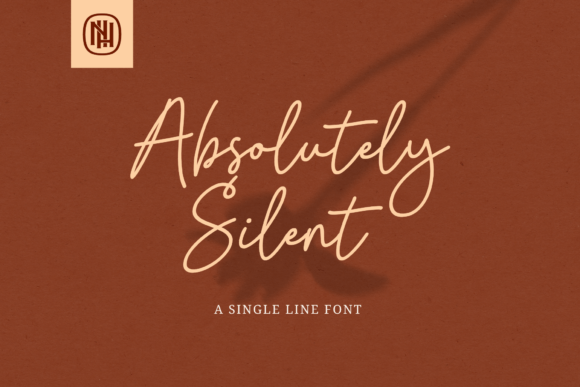
At first glance, the personality of Absolutely Silent is defined by its line quality. Many handwritten fonts suffer from "vector bloat," where the strokes vary wildly in thickness, trying too hard to look like authentic ink. This font takes a different approach. It utilizes a consistent, single-line weight that feels clean and deliberate. This gives it a modern edge that is often missing in script typefaces. It avoids the messy loops and hard-to-read ligatures that plague similar styles.
The visual appeal lies in its versatility as a creative font. Because the stroke is refined and uncluttered, it reads well at smaller sizes—a rarity for handwritten font families. It carries the warmth of a personal note but the legibility of a functional display type. This balance makes it an exceptional choice for designers who want to inject personality into a layout without sacrificing the user experience. It is a premium asset that solves the common problem of "friendly but unreadable" typography.
Strategic Applications: From Branding to Publishing
The true value of any premium font is measured by its utility across different mediums. Absolutely Silent is not just a one-trick pony for greeting cards; it is a robust tool for serious commercial applications. Here is how different professionals can leverage this typeface:
- Logo Design and Brand Identity: For lifestyle brands, boutique hotels, or artisanal product lines, this font offers an immediate sense of authenticity. It pairs beautifully with a geometric sans serif font for a look that is both trendy and enduring.
- Packaging Design: On physical products, the font works exceptionally well for taglines or specific product names (like "Organic" or "Small Batch"). Its refined touch suggests high quality and care.
- Editorial Design: In editorial design, such as magazine pull quotes or chapter headers, it provides a soft counterpoint to dense body text. It draws the eye without the aggression of a bold slab serif.
- Digital and Social Media: For social media graphics, where users scroll rapidly, a handwritten font like this can stop the thumb. It feels native to the platform—personal and direct—unlike a stiff corporate typeface.
Pairing and Hierarchy
One of the most critical aspects of modern typography is the font pairing. You cannot simply drop a script font onto a page and hope for the best. Absolutely Silent requires a strong partner to function correctly. Because it is light and airy, it needs a heavy anchor. I recommend pairing it with a sturdy serif font for a classic look, or a bold, wide sans serif font for a contemporary aesthetic.
Think of Absolutely Silent as the supporting actor that steals the scene. It should be used for headlines, sub-headers, or calls to action where emotional connection is key. Using it for long paragraphs of body copy would be a mistake; that is the job of your primary text typeface. By restricting its use, you maintain its special status and ensure your visual hierarchy remains clear and effective.
Practical Implementation and Licensing
When you decide to integrate Absolutely Silent into your workflow, there are practical considerations to address. First, always test the font in the specific context where it will live. A typeface can look vastly different in a vector program like Illustrator compared to a live web design environment. Check the rendering on different browsers and mobile devices to ensure the delicate strokes don't disappear on low-resolution screens.
Furthermore, review the technical details of the design assets. Does the font include OpenType features? While Absolutely Silent is praised for its simplicity, check for alternate characters or ligatures that can help you avoid repetition if you use the same letter twice in a word. This small detail separates amateur designs from professional work.
Finally, you must respect the commercial font licensing. If you are a freelancer creating a logo for a client, or a business owner using the font on your merchandise, ensure you have the correct license. Most premium fonts require a specific license for "server use" (if used on a web app) or "desktop use" for print. Using a creative font legally protects your business and supports the type designers who create these tools.
The Verdict on Absolute Silence
In a market saturated with loud, decorative scripts, Absolutely Silent stands out through restraint. It proves that a handwritten font doesn't need to be messy to be expressive. For the entrepreneur looking to build a brand identity based on trust, or the publisher aiming for a more conversational tone, this typeface is a powerful ally. It bridges the gap between the digital and the organic, offering a timeless style that will likely remain relevant long after current design fads have faded.
If your current designs feel sterile or disconnected from your audience, consider the human element. By swapping a rigid typeface for Absolutely Silent, you aren't just changing letters; you are changing the tone of voice. You are moving from a broadcast to a conversation, and in today's crowded landscape, that personal touch is exactly what captures attention.