Dihot: Where French Classicism Meets Modern Design
Understanding the Soul of the Typeface
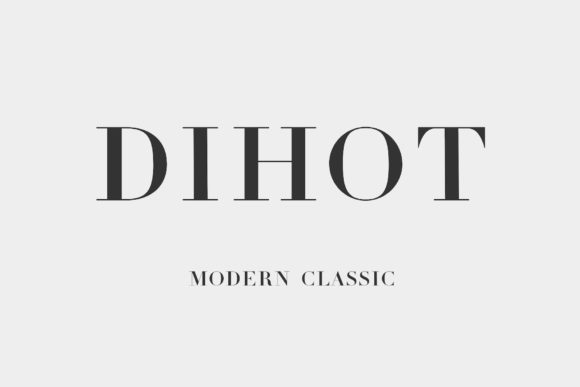
When you look at a typeface like Dihot, you are looking at more than just a collection of letters; you are looking at a piece of history reimagined for the modern screen. Inspired by the legendary French type designer Firmin Didot, this serif font carries the DNA of the 19th century but wears a sharp, contemporary suit. It is a high-contrast typeface, meaning the difference between the thinnest hairlines and the thickest stems is dramatic. This visual tension creates an immediate sense of drama and precision. It doesn't whisper; it announces. For designers looking to inject a sense of heritage or luxury into their work, Dihot provides that specific "editorial" look that has remained popular for centuries.
However, unlike its historical predecessors, Dihot introduces a modern geometric feel. The curves are refined, and the terminals are sharp, giving it a clean, digital-ready finish. It avoids the dusty, overly ornate feel of old-fashioned type, positioning itself as a premium font for contemporary use. The personality of Dihot is confident, intelligent, and undeniably glamorous. It suggests that whatever it is labeling—be it a product, a person, or an idea—is of high value and serious quality.
Strategic Applications: From Packaging to Pixels
The true test of a creative font is its versatility. While Dihot is a display font designed to shine in large sizes, its applications are surprisingly broad if you understand its strengths. In the realm of packaging design, Dihot is a powerhouse. Imagine a high-end candle box, a bottle of artisanal gin, or a luxury skincare line. The high contrast of the letterforms commands attention on a crowded shelf, instantly communicating a brand identity rooted in sophistication.
In editorial design, such as fashion magazine covers or art gallery exhibit posters, Dihot thrives. It pairs beautifully with minimalist layouts. Because the font has such a strong visual presence, you don't need to clutter the page with complex graphics. Let the typography do the heavy lifting. For wedding invites, it moves away from the flowy, hard-to-read script fonts and offers a look that feels timeless and formal yet modern.
Even in digital design, Dihot has a role to play. While you wouldn't use it for body text on a website due to its thin hairlines, it is perfect for hero section headers and social media graphics. A bold headline set in Dihot on an Instagram story or a Pinterest pin immediately stops the scroll. It gives bloggers and content creators a way to look polished and professional without hiring a full design team.
Technical Nuances and Readability
Understanding the mechanics of Dihot is essential for successful implementation. As a high-contrast serif font, it is not designed for long-form reading at small sizes. If you try to set a paragraph of body copy at 12px using Dihot, the thin strokes may disappear, making the text hard to read. This is a common trait among Didone-style typefaces.
Therefore, treat Dihot as your "shouting" voice, not your "talking" voice. Use it for H1 and H2 headers, logos, and pull quotes. For the body text, you need a stable companion. A clean sans serif font or a classic text serif with low contrast makes the best font pairing. This contrast between the dramatic header and the readable body creates a strong visual hierarchy, guiding the reader's eye naturally from the headline to the content.
Building a Brand with Dihot
Choosing a typeface is a branding decision. When an entrepreneur or small business owner selects Dihot, they are making a specific promise to their audience. This commercial font signals that the brand values tradition, elegance, and quality. It is particularly effective for businesses in the fashion, beauty, hospitality, and art sectors.
Consistency is key in branding. Once you integrate Dihot into your design assets, ensure it is used consistently across all touchpoints. Whether it is on your website, your business cards, or your email newsletters, the repetition of this distinct typeface builds recognition. Over time, your audience will associate the sharp, high-contrast look of Dihot with your specific brand experience.
Practical Guide to Implementation
Before you commit to using Dihot for a major project, there are a few practical steps to take to ensure success.
- Evaluate the Context: Consider the medium. Dihot looks spectacular in print, especially on textured paper stocks like cotton or linen used for stationery. On screens, ensure your background contrast is high enough to support the font's thin details.
- Test Your Pairings: Don't just guess. Take the time to mock up your design. Try pairing Dihot with a geometric sans serif font for a modern look, or a simple handwritten font for a touch of approachability (though be careful not to clash with its formality).
- Check the Styles: A good premium font usually comes with various weights and styles. Look at the italic version of Dihot. Didone italics are famously beautiful and can add a dynamic movement to your layouts that the upright version cannot.
- Licensing: Always verify the license. If you are using this for logo design or web design, ensure your license covers those specific use cases. Respecting the font creator's work ensures you have legal access to these modern typography tools.
Ultimately, Dihot is a tool for transformation. It takes ordinary text and elevates it into art. By respecting its high-contrast nature and pairing it wisely, you can leverage this typeface to create designs that feel luxurious, historical, and undeniably epic.