Goldfield: A Western Serif for Modern Branding
The Allure of Vintage Typography in a Digital Age
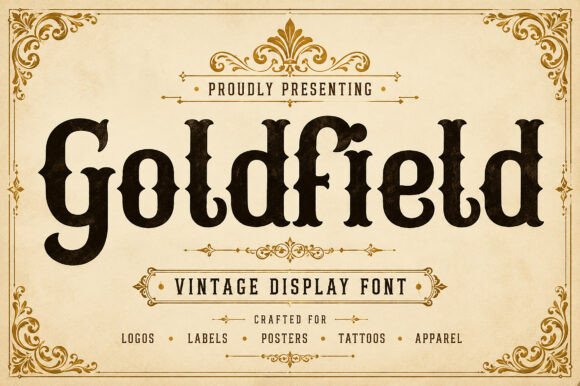
In a design landscape saturated with clean sans serifs and minimalist scripts, a font with genuine character can be your most powerful asset. Goldfield isn't just another serif typeface; it's a deliberate nod to the bold, ornamental lettering of the American West, reimagined for today's creative demands. Its personality is immediate—defined by strong, confident strokes, subtle decorative flourishes on terminals and serifs, and a sturdy, grounded presence. This isn't fragile or overly delicate. Goldfield carries a sense of history, reliability, and handcrafted quality. The "bold western twist" is evident in its slightly condensed proportions and the way its curves feel both classic and assertive. It’s a premium font designed to make a statement without shouting, offering a unique blend of nostalgia and contemporary crispness.
Where Goldfield Truly Shines: Practical Applications
The true test of any creative font is its versatility. Goldfield excels in contexts where you want to inject warmth, authenticity, and a touch of rugged elegance. Its strength lies in display and logo design, where its distinctive letterforms can be fully appreciated at larger scales. Imagine it anchoring the brand identity for a craft distillery, a boutique hotel with a rustic theme, or a specialty coffee roaster. The font's inherent character immediately communicates a story of tradition and quality.
- Branding & Packaging: For whiskey labels, artisanal food packaging, or brewery logos, Goldfield provides instant shelf appeal. Its vintage aesthetic suggests craftsmanship and heritage, key selling points for products that value story and process.
- Editorial & Publishing: Use it for magazine headlines, chapter titles in books, or stylized pull quotes in layouts. Paired with a clean sans serif font for body text, it creates a striking visual hierarchy that guides the reader's eye and establishes a strong editorial voice.
- Digital & Social Media: Goldfield translates surprisingly well to screen. It’s perfect for creating impactful social media graphics, YouTube thumbnails, or website hero sections that need to stop the scroll. Its bold shapes ensure clarity even at smaller sizes on mobile feeds.
- Apparel & Merchandise: The font's graphic quality makes it ideal for t-shirt designs, hat embroidery, and merchandise. It carries a timeless cool that avoids feeling trendy or disposable.
Making It Work: Readability, Pairing, and Professional Use
While Goldfield is a display font at heart, thoughtful application ensures it enhances rather than hinders communication. Its solid character shapes contribute to good readability in headlines and short bursts of text. However, for long-form paragraphs, always pair it with a more neutral, highly legible typeface. A classic sans serif font like a geometric or grotesque style creates a beautiful, balanced contrast, allowing Goldfield to handle the emotional, attention-grabbing work while the secondary font delivers information cleanly.
Before committing to a project, test the font rigorously. Evaluate how its ornamental edges render at your intended size. Check the spacing between letters (tracking) and adjust if necessary for perfect alignment. Review the full character set—does it include the ligatures, alternates, or stylistic sets you need? For commercial projects, verifying the commercial font license is non-negotiable. Ensure it covers your intended use, whether for client work, merchandise, or digital ads. A premium font like Goldfield is an investment in your design assets, and proper licensing protects that investment and your work.
Ultimately, Goldfield is more than just a collection of letters. It's a tool for building a brand identity with depth and personality. It asks you to slow down, to consider craftsmanship, and to design with intention. When used thoughtfully, it doesn't just present words—it evokes a feeling, connects with an audience on an emotional level, and transforms ordinary projects into memorable experiences. It’s the kind of typeface that reminds us why typography is the voice of design.