Elm: Where Typography Meets the Magic of the Deep Forest
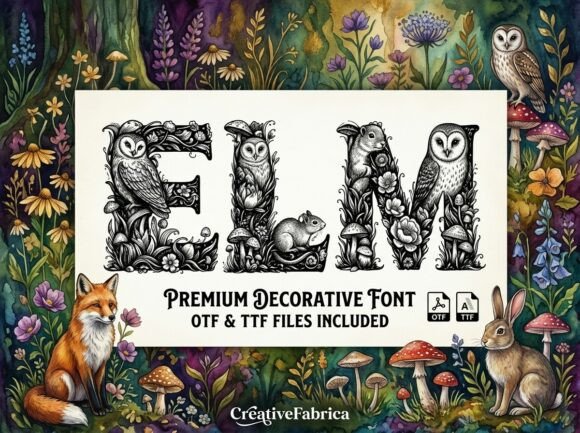
Imagine a typeface that doesn't just spell out words but tells a story with every letter. This is the essence of Elm, a premium decorative font that transports viewers straight into a storybook world. At its core, Elm is a masterclass in illustrative typography. Each character is meticulously composed of woodland creatures and elements—watchful owls perched on serifs, curious squirrels forming the curves of an 'S', hidden mushrooms dotting an 'i', and twisting ivy weaving through the crossbars of an 'H'. It’s not a font you simply read; it’s a font you explore.
A Typeface with a Woodland-Storybook Soul
Elm’s personality is rooted in fantasy, nostalgia, and the quiet wonder of nature. Its visual style is rich, detailed, and inherently whimsical, making it a standout display font rather than a body text workhorse. The illustrative detail is its defining feature, but it’s applied with a keen sense of structure, ensuring each letterform remains recognizable and cohesive. This isn't a chaotic jumble of drawings; it's a carefully designed typeface where the natural elements enhance, rather than obscure, the letter's form. The overall appeal is one of enchantment—perfect for projects that need to evoke a sense of magic, adventure, or gentle fantasy.
Where Elm Truly Shines: Practical Applications
Understanding where a creative font like Elm excels is key to using it effectively. Its detailed nature means it's best suited for applications where impact and character are paramount, and where text can be displayed at a larger size.
- Publishing & Editorial Design: Elm is a natural fit for independent fantasy book titles, chapter headings in children's storybooks, or branding for a boutique publishing house. It instantly sets a genre-specific tone, signaling to readers the kind of world they’re about to enter.
- Branding & Logo Design: For businesses with a nature or fantasy theme—think eco-lodges, artisanal tea brands, botanical gardens, or fantasy gaming studios—Elm can form the cornerstone of a memorable brand identity. It works beautifully for logomarks, event titles, or hero graphics on a website.
- Digital & Social Media Graphics: In the scroll-stopping world of social media, Elm is a powerful tool. Use it for enchanting "forest-aesthetic" social media headers, promotional graphics for a book launch, or eye-catching pins for a craft blog. Its detail captures attention in a crowded feed.
- Print & Packaging Design: Imagine Elm on the label of a small-batch honey jar, the cover of a nature journal, or as the title font for whimsical nursery wall art. In packaging, it communicates artisanal quality and a story-driven ethos.
- Personal & Craft Projects: For hobbyists and crafters, Elm elevates personal projects. Think custom invitations for a woodland-themed party, scrapbook titles, or unique quotes for framing.
Mastering Elm: Guidance for Designers and Creators
Using a specialized display font like Elm effectively requires a thoughtful approach. Here’s practical guidance for integrating it into your workflow.
Evaluating Project Fit and Readability
First, assess if Elm’s personality aligns with your project’s goals. It’s ideal for conveying whimsy, fantasy, and nature. If your project demands corporate seriousness or minimalist clarity, it’s likely not the right choice. Always test readability at the intended size. Because of its intricate details, Elm performs best at larger point sizes—headlines, titles, and logos. Avoid using it for long paragraphs or small body text, where the details can become muddy and hinder legibility.
The Art of Font Pairing
Elm’s ornate nature means it pairs best with simpler, cleaner typefaces. A classic serif font or a neutral sans serif font for body text will provide a beautiful contrast, letting Elm’s details shine without overwhelming the viewer. For a cohesive brand identity, you might pair Elm with a simple script font for secondary text or a modern typography sans-serif for functional elements. The key is balance: let Elm be the star of the show, supported by understated companions.
Exploring Styles and Commercial Use
Before purchasing any premium font, review the included styles and character set. Does Elm come with alternates, ligatures, or multilingual support? These features can add valuable flexibility to your design assets. Crucially, understand the commercial font licensing. Ensure the license covers your intended use—whether for a client’s logo design, merchandise, or digital products. A reputable font foundry will provide clear licensing terms.
Practical Testing and Implementation
Always test Elm in context before finalizing a design. Create mockups for your specific application—a book cover, a social media mockup, a packaging layout. See how it interacts with your color palette, imagery, and other typographic elements. This step is vital for ensuring the final result is cohesive and professional, not just a collection of beautiful design assets.
In the realm of modern typography, Elm stands out as more than just a creative font; it’s a narrative tool. It offers a direct path to infusing projects with personality and storytelling depth. For designers, marketers, and creators looking to craft an experience that resonates on an emotional level—particularly with audiences who cherish fantasy, nature, and artistry—Elm provides a unique and powerful voice. It’s a testament to how thoughtful type design can do more than communicate words; it can evoke entire worlds.