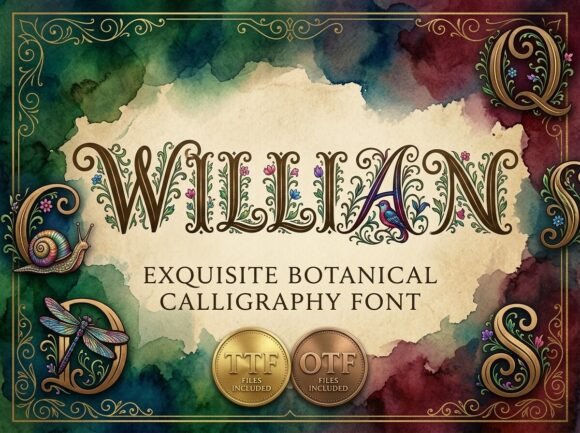
William: Crafting Timeless Elegance with an Ornate Script
In the world of design, typography is more than just letters on a page; it's the voice of your project. Finding a typeface that speaks with the right tone, personality, and level of detail can transform a good design into a memorable one. Enter William, a premium font that doesn't just speak—it sings with the grace of a Victorian garden. This isn't your typical script font. William is a meticulously crafted ornate floral typeface, where each letterform is a miniature work of art, woven from delicate vines, blossoms, and subtle nature-inspired details.
The Anatomy of William: A Garden in Every Glyph
What sets William apart from other script and handwritten fonts is its incredible level of detail. At a glance, it presents a flowing, elegant cursive. But look closer, and you’ll discover a hidden world. The ascenders and descenders of letters like 'h', 'g', and 'y' aren’t just simple strokes; they are intricate, climbing vines. The counters (the enclosed spaces within letters like 'o' and 'e') might hold a tiny, budding flower. This meticulous craftsmanship gives the typeface a rich, textured quality that feels both classic and alive.
Its personality is one of refined luxury and natural beauty. William bridges the gap between classic illustration and modern typography. It carries the weight and authority of a traditional serif font in its structure, but the organic, flowing lines give it the approachable warmth of a script. This unique combination allows it to feel exclusive without being cold, and intricate without being cluttered. It’s a typeface that suggests quality, care, and a deep appreciation for artistry.
Where William Truly Blooms: Ideal Applications
A font with this much character demands the right stage. William isn't designed for body text or lengthy paragraphs; it’s a display font meant to command attention in headlines, logos, and standalone statements. Its true value shines in projects where first impressions and brand perception are paramount.
- Branding & Logo Design: For businesses in the luxury, artisanal, or boutique sectors, William is a powerful tool. Imagine it for a high-end florist, a bespoke perfumery, a gourmet chocolate shop, or a luxury wedding planning service. It instantly communicates a brand identity rooted in elegance, quality, and meticulous detail. Used as a primary logo typeface, it creates an unforgettable mark.
- Wedding & Event Stationery: This is William’s natural habitat. It is perfect for ornate wedding invites, save-the-dates, menus, and programs. The font’s inherent romance and sophistication set the tone for a classic, elegant event. Its detailed nature means even a simple, single-color print looks rich and textured.
- High-End Packaging & Product Design: On product labels for artisanal foods, botanical skincare, or specialty goods, William elevates the perceived value. It tells the customer that what’s inside is crafted with the same care as the lettering on the outside. It’s an excellent choice for creating a premium unboxing experience.
- Editorial & Publishing: In magazines, lookbooks, or book covers, William can serve as a stunning drop cap, a chapter title, or a pull quote. It draws the reader’s eye and adds a layer of artistic flair to the editorial design, making pages feel more curated and luxurious.
- Digital & Social Media Graphics: When used thoughtfully, William can make social media graphics, website hero images, and digital ads stand out. A beautiful quote graphic for Instagram or a striking headline on a landing page can leverage its beauty to capture attention and drive engagement.
Practical Guidance: Integrating William into Your Workflow
Choosing a creative font like William is an exciting step, but successful implementation requires a designer’s eye. Here’s how to approach it effectively.
Evaluating Project Fit and Readability
First, assess if the font’s personality aligns with your project’s goals. William is best suited for brands and projects aiming for a tone of elegance, nature, tradition, or luxury. It may not be the right fit for a tech startup or a minimalist, modern brand. Because of its intricate details, readability is key. Always test it at the size you intend to use it. While it remains legible at medium to large sizes for headlines, it will become difficult to read at small point sizes. For accessibility, ensure there is sufficient contrast against the background.
Mastering Font Pairing
A display font like William needs a partner. The goal of font pairing is to create contrast and hierarchy. A clean, simple sans serif font is often the perfect companion. The simplicity of a sans serif allows the ornate details of William to be the star without creating visual noise. For example, pairing William with a font like Montserrat, Lato, or Open Sans for subheadings or body text creates a balanced and professional layout. You could also pair it with a simple, elegant serif font for a more traditional, literary feel. Avoid pairing it with other highly decorative or script fonts, as this will almost always look chaotic.
Checking Included Styles and Licensing
Before purchasing, check the full character set. A well-designed premium font often includes stylistic alternates, ligatures (special character pairings), and swashes that provide even more creative control. These extras can help you customize the look and avoid repetition if using the same letter multiple times. Finally, and most importantly for commercial projects, always review the licensing. Ensure the font license covers your intended use, whether it’s for a single client project, unlimited commercial work, or use in digital products for sale. Proper licensing is a cornerstone of professional practice and respects the work of the type designer.
William is more than just a font; it's a design asset that brings a distinct, handcrafted artistry to any project it touches. By understanding its strengths and applying it with intention, you can leverage this beautiful typeface to build a stronger brand identity, create more engaging marketing materials, and produce truly stunning visual work. It’s a testament to how the right typography can tell a story all on its own.