Hindia: A Handwritten Font That Balances Calligraphy and Modernity
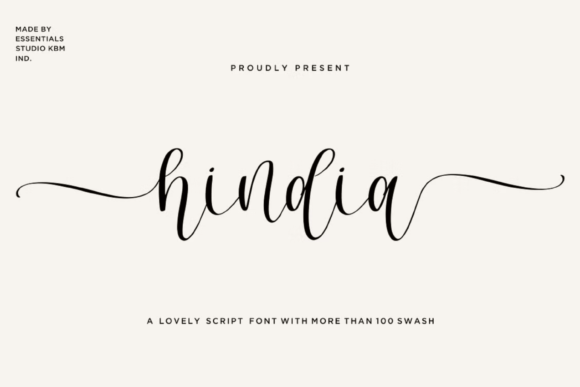
In the search for a premium font that truly stands out, many designers find themselves caught between overly formal scripts and casual, messy typefaces. Hindia solves this problem by striking a perfect balance. It is an exquisite handwritten font that draws masterful inspiration from classic calligraphy but strips away the stuffiness. The result is a typeface that feels contemporary, fresh, and incredibly versatile. If you are looking to elevate your brand identity or give your creative projects a personal touch without sacrificing legibility, Hindia is designed to become your new favorite tool.
The personality of Hindia lies in its fluidity. Unlike rigid geometric fonts, this script font mimics the natural rhythm of a hand moving across paper. However, it avoids the chaos often associated with "grunge" or overly loose handwriting styles. The letterforms maintain a consistent baseline and x-height, ensuring that the text remains organized and professional. This contemporary approach to modern typography makes Hindia feel fresh and relevant, fitting perfectly into current design trends that favor authenticity and human connection over sterile perfection.
Practical Applications for Modern Creators
Understanding where a typeface works best is just as important as liking how it looks. Hindia shines in projects where you need to communicate warmth, elegance, or a personal touch. Because it is a display font, it commands attention when used for headlines, logos, and hero sections on websites.
Here are some specific areas where Hindia excels:
- Logo Design and Branding: A logo sets the tone for a business. Hindia offers the sophistication required for high-end logo design while remaining approachable enough for lifestyle brands. It helps small business owners and entrepreneurs create a brand identity that feels established yet intimate.
- Packaging Design: For physical products, packaging needs to stand out on the shelf. Hindia works beautifully for product names on labels, especially in the beauty, food, or artisanal craft sectors. It suggests quality and care.
- Editorial and Publishing: Publishers and bloggers can use Hindia for chapter titles, pull quotes, or magazine mastheads. It adds a layer of visual interest to editorial design that standard serif fonts or sans serif fonts cannot achieve.
- Digital Marketing and Social Media: In a crowded social feed, text needs to stop the scroll. Hindia is excellent for social media graphics, quote cards, and promotional banners. Its distinct style improves recognition and engagement.
However, like any creative font, context matters. Hindia is optimized for display purposes rather than long-form body text. For web design, pair it with a clean, legible sans-serif for paragraphs to ensure readability, reserving Hindia for headers and calls to action.
Designing with Hindia: Pairing and Hierarchy
One of the most common questions in design is how to handle font pairing. Because Hindia has strong calligraphic roots, it pairs best with fonts that are structured and clean. A geometric sans-serif or a simple, sturdy serif font provides the necessary contrast to let Hindia’s elegance breathe.
When creating visual hierarchy, use Hindia to establish the mood at the top of the page, then transition to a neutral font for the details. This guides the reader's eye naturally. The high-contrast strokes of Hindia draw the viewer in, while the supporting font delivers the information efficiently.
Technical Advantages: PUA Encoding and Glyphs
Beyond aesthetics, Hindia offers significant technical advantages that designers and crafters will appreciate. The font is PUA encoded, which stands for Private Use Areas. In practical terms, this means you have complete access to all glyphs and ligatures even if you are using software that does not support advanced OpenType features natively.
This feature is a game-changer for hobbyists using basic design tools or those working in software like Canva or Cricut Design Space. You can easily access alternate characters, swashes, and ligatures to customize the text further. This flexibility allows for a truly custom look without needing advanced typographic knowledge. You can mix and match characters to ensure that the handwritten effect looks natural, avoiding repetitive loops that can make digital text look artificial.
Evaluating Fit and Licensing for Your Projects
Before integrating any design assets into your workflow, it is wise to evaluate the fit and the usage rights. Hindia is a commercial font, meaning it is designed for professional use. Whether you are creating a client logo, a t-shirt line, or a digital product, you need to ensure your license covers that specific application.
When testing Hindia for a project, consider the following:
- Test for Readability: Write out your specific headline or brand name. While Hindia is legible, certain letter combinations in script fonts can sometimes create ambiguity. Check the spacing and ensure your message is instantly clear.
- Review Included Styles: Does the font family include different weights or styles? Having a bold or light version can significantly expand how you use the typeface across different mediums.
- Check the Vibe: Does the font match the voice of your project? Hindia is elegant and fresh, but if your brand voice is aggressive or hyper-technical, a different display font might be more appropriate.
Ultimately, Hindia is more than just a handwritten font; it is a versatile asset that bridges the gap between traditional calligraphy and modern typography. By understanding its strengths—from its PUA encoding to its aesthetic versatility—you can confidently use it to bring your projects to the highest level. Whether you are designing for print or digital, Hindia provides the sophistication and fresh appeal needed to make a lasting impression.