Playing Font: A Handwritten Touch for Joyful Design
There’s a certain warmth that a truly well-crafted handwritten font brings to a project. It’s the difference between a sterile announcement and a personal invitation. Playing is a typeface that embodies this principle perfectly. It’s not just another script font; it’s a carefully designed asset that carries a distinct personality—gentle, romantic, and inherently joyful. As a designer or brand creator, finding a premium font that feels both authentic and versatile is like discovering a secret weapon for your visual toolkit. Playing offers that rare combination of relaxed charm and professional polish, making it a standout choice for a wide array of creative endeavors.
The Visual Heart of Playing: More Than Just a Pretty Face
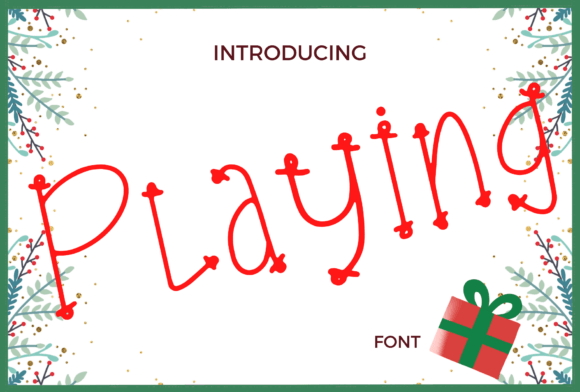
At its core, Playing is a handwritten font, but that simple classification doesn’t do it justice. Its letterforms are fluid and connected with a natural, flowing rhythm, reminiscent of thoughtful penmanship. The strokes have a soft, rounded quality that avoids the sharp edges or overly casual scrawl found in many similar typefaces. This gives it a modern typography sensibility—it feels current, clean, and approachable without being childish. The spacing and kerning are meticulously balanced, ensuring that words maintain their legibility even as they dance across the page. This careful construction is what elevates Playing from a simple decorative element to a functional display font capable of holding its own in professional contexts.
The personality of Playing is its greatest strength. It communicates warmth, creativity, and a touch of whimsy. This isn’t a font for conveying corporate austerity; it’s for projects that want to connect on a human level. Whether you’re designing a logo for a boutique bakery, crafting social media graphics for a lifestyle brand, or laying out the pages of a wedding invitation suite, Playing injects an immediate sense of personality and care. It’s a creative font that tells a story before the words are even read, setting an emotional tone that resonates with audiences seeking authenticity.
Where Playing Truly Shines: From Brand Identity to Personal Projects
Understanding a font’s ideal applications is key to using it effectively. Playing’s gentle aesthetic makes it exceptionally well-suited for projects where a personal, romantic, or joyful tone is desired. In logo design, it can become the cornerstone of a brand’s identity for businesses in the wellness, beauty, artisanal food, or creative coaching spaces. It pairs beautifully with a clean sans serif font for a balanced and modern look, or with a delicate serif font for a more classic, elegant feel.
Beyond logos, its applications are vast:
- Editorial and Publishing: Use Playing for chapter titles, pull quotes, or section headings in magazines, books, or blogs to add a personal, authorial voice. It’s perfect for lifestyle, romance, or craft-focused publications.
- Packaging Design: Imagine a handwritten-style font on a candle label, a bag of artisan coffee, or a box of handmade chocolates. Playing adds that artisanal, small-batch quality that consumers love.
- Web and Digital Design: As a web font, it can be used sparingly for headlines on a homepage, call-to-action buttons, or in email newsletter graphics to break the monotony of standard web fonts and increase engagement.
- Marketing and Social Media: For Instagram quotes, Facebook ad headlines, or promotional flyers, a font like Playing grabs attention and feels more like a friend’s recommendation than a corporate broadcast. It’s ideal for creating social media graphics that feel native and engaging.
- Personal and Craft Projects: The font is a dream for crafters. Use it for custom wedding stationery, greeting cards, scrapbooking, or even monogramming. Its commercial font license (always verify specific terms) often allows for this, making it a valuable design asset.
Practical Guidance: Integrating Playing into Your Workflow
Choosing the right font is a strategic decision. Here’s how to evaluate if Playing is the right fit for your next project and how to use it effectively. First, consider the project’s audience and goal. If you’re aiming for a professional, serious, or highly technical feel, Playing might not be the primary choice. However, if the goal is to evoke friendliness, creativity, nostalgia, or romance, it’s an excellent candidate.
Next, think about font pairing. Playing works best when it has room to breathe. Avoid pairing it with other highly decorative or script fonts, as this creates visual chaos. Its ideal companions are neutral, structured typefaces. A sturdy sans serif like Open Sans or Montserrat provides a clean, modern counterpoint. A classic serif like Lora or Merriweather can offer a more traditional and elegant contrast. The key is to let Playing handle the emotional headlines while its partner font delivers the bulk of the information with clarity.
Always review the font package. Check what styles are included—does it have regular, bold, or italic variations? Examine the character set: does it include the numerals, punctuation, and special characters you need? Crucially, for any commercial use, you must verify the commercial font license. Reputable foundries are clear about this, and respecting licensing is non-negotiable for professional work.
Finally, test for readability. While Playing is designed for clarity at display sizes, it’s not intended for long blocks of body copy. Use it for short, impactful text: headlines, logos, buttons, and labels. View it at the size you plan to use it in your brand identity materials. Does it remain legible when small, such as on a business card? Does it maintain its charm when large, like on a billboard? Testing in context is the best way to ensure it enhances, rather than hinders, your visual hierarchy.
In the landscape of modern typography, finding a font that balances personality with functionality is a significant win. Playing is that kind of typeface. It’s a tool that doesn’t just decorate a design but actively shapes its perception, helping you build a more engaging, consistent, and recognizable presence for your brand or project. It reminds us that at the heart of great design is often a human touch, and Playing delivers that touch with grace and reliability.